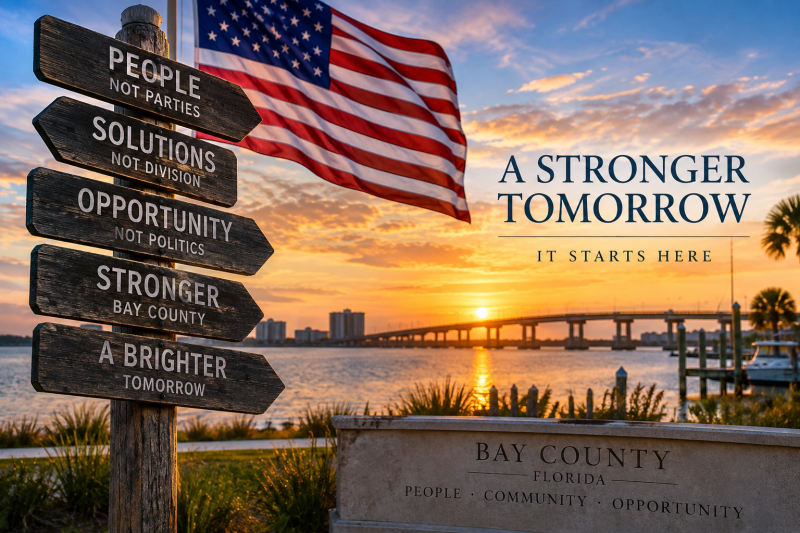
For years, we’ve been told that America is hopelessly divided into two political camps.
Red versus blue. Republican versus Democrat. Left versus right. Pick your team, put on the jersey, and spend the next four years explaining why everything your side does is necessary and everything the other side does is an existential threat to the republic.
There’s just one problem with that picture.
It increasingly doesn’t describe the American people.
In fact, if you step outside the daily political shouting match and look at what voters are actually doing, something much more interesting is happening.
Americans are walking away from the two major parties.
Not necessarily toward one particular third party. Not necessarily toward the ideological center. And certainly not because everyone suddenly agrees.
They’re becoming politically homeless.
Gallup found that a record 45% of American adults identified as independents in 2025. Republicans and Democrats were tied at just 27% each. Among independents themselves, 47% described their ideology as moderate, 27% as conservative and 24% as liberal. (Gallup.com)
Think about that for a second.
The largest political identity in America right now isn’t Republican.
It isn’t Democrat.
It’s neither.
Gallup separately found that 62% of Americans believe the Republican and Democratic parties are doing such a poor job that a third major party is needed. Among independents, that number jumps to 74%. (Gallup.com)
But here’s where things get complicated.
Only 15% of Americans say they are very likely to vote for a third-party candidate.
That gap tells us almost everything we need to know.
Americans aren’t lacking dissatisfaction.
They’re lacking a credible alternative.
The politically homeless aren’t really “moderates”
This is the first thing we need to understand.
When people hear “independent,” they often picture somebody standing exactly halfway between Republicans and Democrats.
That’s not necessarily what the data shows.
Many politically independent Americans have strong opinions. Those opinions simply don’t fit neatly into the ideological packages the two parties have assembled.
You can be fiscally conservative and skeptical of foreign wars.
You can support gun rights and criminal justice reform.
You can believe strongly in border security while also believing in due process.
You can support school choice without believing public schools are the enemy.
You can believe police officers perform an incredibly important public service while simultaneously believing the Fourth Amendment applies to everyone.
You can be personally traditional while believing government has no business micromanaging the private lives of peaceful adults.
You can support free enterprise while opposing corporate welfare.
None of those combinations are inherently contradictory.
They’re only contradictory if politics requires us to purchase our beliefs as a package deal.
Pew Research Center’s massive 2026 Political Typology study helps illustrate this beautifully. Rather than forcing Americans into two partisan boxes, Pew sorted the public into nine groups based on their actual political and cultural values.
Three are especially interesting: the Pragmatic and Polite Right, representing 11% of Americans; the Unconventional Right, representing 12%; and the Tuned-Out Middle, representing another 9%. Together, those groups account for roughly 32% of the public. (Pew Research Center)
They certainly don’t agree about everything.
That’s precisely the point.
The Pragmatic and Polite Right has a small-government streak but takes more measured positions on immigration and other issues. Pew found that two-thirds support a pathway to legal status for people already living in the country illegally, even while the group remains concerned about illegal immigration and border security. (Pew Research Center)
The Unconventional Right is more conservative on immigration and cultural questions but breaks from traditional conservatives elsewhere. A modest majority, for example, says abortion should generally be legal, and the group is substantially more favorable toward NATO than the groups farther to its right. (Pew Research Center)
Then there is the Tuned-Out Middle.
These folks may be among the most fascinating voters in America.
More than half consider themselves independents or something else. Fifty-two percent describe themselves as moderate and 31% as conservative. Yet only 32% voted in 2024. Nearly half rarely follow politics. (Pew Research Center)
These aren’t necessarily people desperately searching for another political party.
Many have simply stopped believing politics has much to offer them.
And that may be the biggest opportunity of all.
The opening is becoming difficult to ignore
Pew’s July 2026 polling provides another clue.
Among registered voters in the Unconventional Right, 26% either supported another congressional candidate or weren’t sure whom they would support. Among the Pragmatic and Polite Right, that figure was 21%.
Among the Tuned-Out Middle?
It was 43%. (Pew Research Center)
At the same time, President Trump’s approval has fallen substantially among these politically mixed groups. Among the Unconventional Right, it declined from 78% around the beginning of his second term to 51% in July. Among the Pragmatic and Polite Right, it fell from 50% to 34%. (Pew Research Center)
That doesn’t mean those voters are becoming Democrats.
That’s an important distinction.
Many aren’t.
It means the coalitions underneath our two major parties are much less stable than the red-and-blue electoral map makes them appear.
And that’s why I think the biggest opportunity for a third political force in America isn’t necessarily building another ideological party from scratch.
It may be building a coalition around a handful of principles millions of Americans already share.
What would that coalition actually stand for?
I think it begins with seven basic ideas.
First, make life affordable and make government live within its means.
People don’t need another lecture about economic theory. They know groceries cost too much. Housing costs too much. Insurance costs too much. Healthcare costs too much.
A limited-government message has to connect directly to everyday life.
Stop wasting taxpayers’ money. Eliminate unnecessary regulations. Remove barriers to building housing. Stop handing politically connected businesses special treatment. Make it easier to start a business, hire somebody and earn a living.
Fiscal conservatism should be less about slogans and more about respecting the person who had to work for every dollar government spends.
Second, defend civil liberties regardless of who is in power.
The Fourth Amendment shouldn’t become optional because the president happens to belong to your political party.
Neither should free speech.
Neither should due process.
Neither should property rights.
The Constitution isn’t a weapon we pull out when the other team controls government and put back in the drawer when ours does.
Third, secure the border while respecting due process.
We can have an orderly immigration system. We can know who is entering the country. We can enforce immigration laws.
And we can do all of that without abandoning constitutional principles or pretending every immigration problem can be solved with the loudest possible rhetoric.
Fourth, put educational opportunity ahead of educational systems.
Every child learns differently.
Funding should empower families to choose the environment that works best for their child—public, private, charter, religious, homeschool, virtual, vocational or something entirely new.
That isn’t an attack on teachers.
It’s an acknowledgment that children aren’t interchangeable pieces moving through an assembly line.
Fifth, be SMART on crime.
Protect communities aggressively from violence, theft, trafficking, fraud and predatory behavior.
Support law enforcement officers doing their jobs properly.
And hold government accountable when it violates constitutional rights.
Those aren’t contradictory ideas.
Being tough on crime and being tough about the Constitution should go hand in hand.
Sixth, stop treating American military power like the solution to every international problem.
America should maintain the strongest national defense in the world. We should defend ourselves and honor legitimate commitments.
But war should be rare, constitutional and unmistakably connected to the national interest.
Congress should rediscover its constitutional responsibility over war instead of outsourcing enormous decisions to presidents of either party.
Finally, government should do fewer things and do the things it legitimately does exceptionally well.
Fix the road.
Maintain the drainage system.
Answer the phone.
Process the permit.
Protect the public.
Publish the budget.
Respond to the hurricane.
Then leave peaceful people alone.
That might not fit perfectly inside modern Republicanism or modern progressivism.
That’s exactly why it has potential.
Florida gives us an extraordinary case study
Now bring this conversation home.
As of July 31, Florida had approximately 5.61 million registered Republicans, 4.07 million Democrats, 3.33 million voters with no party affiliation and nearly 498,000 registered with minor parties. (Florida Department of State)
That means roughly 3.8 million active Florida voters were registered outside the Republican and Democratic parties.
Even more striking is the growth of minor-party registration.
Florida had just 65,526 minor-party voters in 2017.
By 2026, that number had reached 497,679. (Florida Department of State)
That doesn’t mean half a million Floridians suddenly became libertarians.
They didn’t.
But it does tell us that registering outside the traditional two-party structure is no longer some obscure political behavior.
And then we get to Bay County.
Bay County may be a better laboratory than people realize
Bay County is unquestionably Republican territory.
The Florida Division of Elections counted 74,195 active Republicans here at the end of July, compared with 23,471 Democrats, 23,585 NPA voters and 5,323 minor-party voters. (Florida Department of State)
The more recent county figures are even more revealing.
As of September 12, the Bay County Supervisor of Elections reported 75,038 Republicans, 23,740 Democrats and 28,951 voters classified as “Other,” which includes voters outside those two major parties, among 127,729 active registered voters. (Bay County Supervisor of Elections)
So no, Bay County isn’t secretly becoming a blue county.
That’s not what I’m suggesting.
What I am suggesting is that there is a substantial pool of voters here who aren’t formally attached to either major party—and another potentially substantial group of Republicans who are conservative without necessarily wanting every local election transformed into a referendum on national partisan politics.
That creates an opening.
Not for a progressive coalition pretending Bay County has suddenly changed ideologically.
And probably not for an ideological Libertarian candidate spending six months trying to convince everyone to read Hayek.
Something much more practical.
Imagine a different kind of Bay County candidate
Picture a candidate somewhere in their 40s or 50s.
They’ve run a business, worked in the community, raised a family or otherwise built deep relationships here.
They understand what it means to make payroll.
They know what insurance costs.
They’ve dealt with permits.
They know the difference between county and municipal government.
They understand budgets.
They aren’t a career politician, but they aren’t politically naïve either.
Ideologically, they’re unmistakably fiscally conservative.
They believe government should be limited.
They believe deeply in constitutional rights.
They’re pro-public safety.
Pro-small business.
Pro-school choice.
Pro-property rights.
Pro-responsible development.
They’re personally grounded in their values but don’t believe county government exists to referee everyone’s private life.
Most importantly, they aren’t angry all the time.
They can sit down with a MAGA Republican for breakfast, an NPA business owner at lunch, a Libertarian that afternoon and a Democratic civil-liberties advocate that evening without changing their principles depending on who’s sitting across the table.
Their philosophy is incredibly simple:
Protect our rights. Keep us safe. Spend our money responsibly. Build the infrastructure our community needs. Then leave people alone.
That’s the candidate I think could become genuinely dangerous to the traditional political structure.
The campaign wouldn’t begin with party
That’s essential.
The candidate wouldn’t spend the campaign saying:
“Become a Libertarian.”
They’d say:
“You don’t have to agree with me about everything.”
That’s a radically different invitation.
A Republican doesn’t have to stop being Republican.
A Democrat doesn’t have to stop being Democratic.
An NPA voter doesn’t have to join anything.
The question becomes much simpler:
Who is going to do the best job for this community?
And that is why I think the most promising place to test this model isn’t Congress.
It isn’t governor.
It certainly isn’t president.
It’s local government.
Start where 447 votes can elect somebody
This might be the most astonishing number in this entire discussion.
Callaway City Commission elections are nonpartisan. Candidates represent wards, subject to residency requirements, but commissioners are elected citywide. (Bay Votes)
In the 2024 Callaway municipal election, Bob Pelletier won Ward 3 with 455 votes.
Kenneth Ayers won Ward 4 with 447 votes. (90.7 WKGC Public Media)
Four hundred and forty-seven.
That should completely change how we think about political organizing.
We spend enormous amounts of time obsessing over presidential campaigns where tens of millions of votes are cast.
Meanwhile, fewer than 500 people can determine who helps make decisions affecting someone’s roads, neighborhood, development, utilities and daily quality of life.
Callaway’s own stated governmental goals emphasize managing growth and development, encouraging economic development, providing services affordably, partnering with the community on public safety and maintaining quality of life. (City of Callaway)
Those issues fit this political model almost perfectly.
Responsible growth.
Infrastructure.
Transparency.
Small business.
Public safety.
Property rights.
Fiscal responsibility.
Competent government.
There is no need to import national culture wars into the race.
The issues are already right outside our front doors.
But the real prize is building trust
Imagine our hypothetical candidate wins a municipal seat.
Now comes the important part.
Don’t immediately start running for the next office.
Govern.
Fix something.
Make something more transparent.
Find unnecessary spending.
Help residents navigate city government.
Ask hard questions about development.
Protect property owners.
Make permitting easier.
Work with people from different political backgrounds.
Vote no when something is wrong.
Vote yes when something is right.
And explain both.
Build receipts.
Over time, people stop identifying the person primarily by party.
They start saying:
“Call them. They’ll actually answer.”
That’s political capital no consultant can manufacture.
Then take the model countywide
This is where the 2026 Bay County elections become especially interesting.
The August primary had 126,286 registered voters, but only 33,491 ballots were cast—a turnout rate of 26.52%. (Elections Florida)
In the nonpartisan School Board District 2 race, Ginger Littleton received 16,154 votes to Michael Petty’s 15,160.
A difference of just 994 votes. (Elections Florida)
Those numbers matter because they demonstrate that local political viability isn’t about persuading all 127,000 registered voters.
It is about identifying the people who actually participate, earning their trust and turning them out.
That changes the equation considerably.
A successful municipal official could spend several years building relationships beyond their city through civic involvement, local media, public meetings and digital content.
Explain county budgets.
Explain property taxes.
Explain impact fees.
Explain infrastructure projects.
Explain surveillance policy.
Explain what government can legally do—and what it can’t.
Don’t constantly say:
“Look at me.”
Say:
“Here’s how this works.”
Eventually, residents outside the candidate’s municipality begin following because they’re learning something useful.
Now the candidate isn’t just building name recognition.
They’re building trust.
What would a countywide coalition look like?
Not a Libertarian coalition.
Not an anti-Republican coalition.
And definitely not a disguised Democratic coalition.
It would be something much more interesting:
Libertarians + NPA voters + reform-minded Republicans + constitutional conservatives + small-business owners + politically disengaged voters + moderate Democrats willing to cross over for a credible candidate.
The Republican voter hears:
“I’m going to fight waste, defend your property rights, support public safety and keep government limited.”
The Libertarian hears:
“I’m going to defend civil liberties even when doing so is politically inconvenient.”
The independent hears:
“I don’t care whose idea it is. If it works, let’s do it.”
The moderate Democrat hears:
“We may disagree, but your rights matter exactly as much as mine, and you will always have a seat at the table.”
The small-business owner hears:
“Government should make entrepreneurship easier, not harder.”
And the person who normally ignores politics hears:
“Your road. Your insurance bill. Your neighborhood. Your taxes. Your family.”
That’s how you build something bigger than a party.
There is one rule this candidate absolutely cannot break
Principles have to remain principles when they become inconvenient.
If surveillance is wrong under a Democratic administration, it’s wrong under a Republican one.
If deficit spending is irresponsible when Democrats do it, it doesn’t become conservative when Republicans do it.
If government censorship is wrong when it targets your speech, it’s wrong when it targets speech you hate.
If due process matters for people you like, it matters for people you don’t.
If political corruption is unacceptable on the other team, it cannot suddenly become complicated when someone from your team does it.
That consistency is the entire brand.
Without it, this becomes just another faction asking voters to switch jerseys.
The real political opportunity isn’t the center
After digging through all of this, I don’t think America’s emerging opportunity is really “centrism.”
That word implies splitting the difference.
Republicans want ten.
Democrats want zero.
So we’ll bravely demand five.
That’s not what I’m talking about.
I’m talking about political independence rooted in consistent principles.
Sometimes that position will look conservative.
Sometimes libertarian.
Sometimes moderate.
Occasionally it may even overlap with something traditionally associated with the left.
Who cares?
The question shouldn’t be:
“Which team proposed it?”
The question should be:
“Is it right?”
That is a much more difficult kind of politics.
It’s also the kind I think millions of Americans are quietly looking for.
People before politics
The numbers tell us something is happening.
Forty-five percent of Americans now identify as independents. (Gallup.com)
Sixty-two percent say the country needs another major political party. (Gallup.com)
Florida has millions of voters outside the two major parties. (Florida Department of State)
Bay County has nearly 29,000 active voters currently classified outside Republican and Democratic registration. (Bay County Supervisor of Elections)
And local elections can be decided by hundreds—or sometimes dozens—of votes.
The constituency exists.
What doesn’t yet exist, at least at scale, is the political infrastructure capable of turning dissatisfaction into credible governance.
That is why I believe the smartest strategy for anyone serious about building an independent, liberty-minded political movement is almost the exact opposite of what third parties have traditionally done.
Don’t begin with the presidency.
Begin with the pothole.
Don’t promise to transform America.
Fix the drainage problem.
Don’t lecture people about political philosophy.
Show them what that philosophy looks like when somebody actually governs according to it.
Don’t demand that Republicans stop being Republicans or Democrats stop being Democrats.
Give them a reason to vote for one person they trust.
Win a municipal election.
Govern well.
Build a record.
Expand the coalition.
Then ask whether the same model can work countywide.
Because maybe the political movement Americans keep saying they want isn’t going to begin with a billionaire launching another national party or a celebrity announcing an independent presidential campaign.
Maybe it begins much closer to home.
Maybe it begins when somebody decides that the person sitting across the table matters more than the letter next to their name.
Maybe it begins with 447 votes.
And maybe the future of independent politics in America isn’t about finding some magical midpoint between Republicans and Democrats at all.
Maybe it’s about remembering something much simpler:
Government belongs to the people—not the parties.
Add comment
Comments